What an AI Agent Swarm Actually Does in a Real Business Today
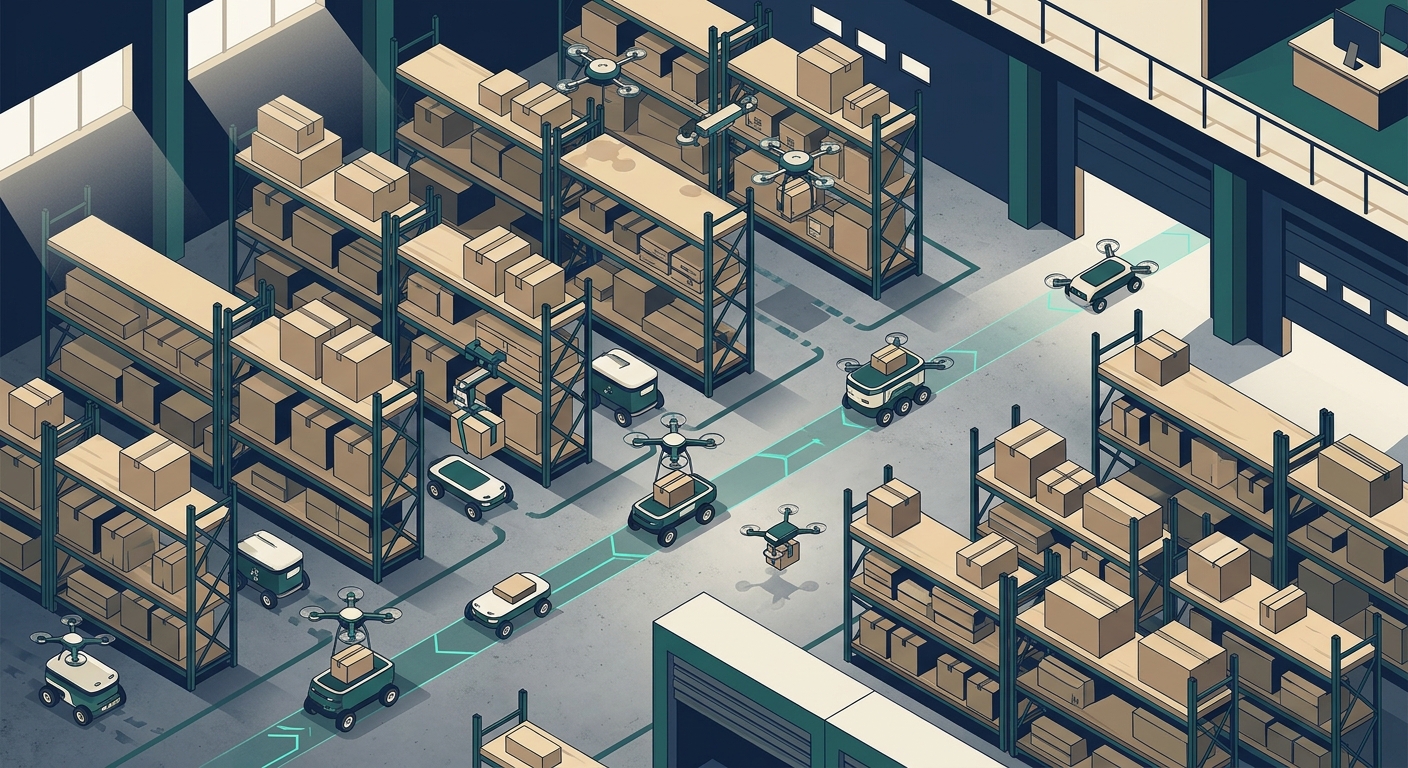
An ai agent swarm looks impressive in a demo: a handful of agents pass a task back and forth, one drafts, one checks, one formats, and the output appears in seconds. That demo is not what a swarm does inside a real mid-market business. In production, multi-agent ai has to survive messy source data, compliance review, handoffs to human staff, and a finance team asking what it actually saved. This article is about that gap — what agent swarms do once the pilot ends and the work starts.
What an AI Agent Swarm Actually Is
A single AI agent takes an instruction and produces an output. A multi-agent system in AI splits a workflow into specialized roles — one agent retrieves, one agent reasons, one agent verifies, one agent routes to a human for sign-off. Cloud providers and vendors describe this architecture well in the abstract: agents that coordinate, delegate, and share context. What most of those explainers skip is what happens when the workflow touches regulated data, legacy systems, or a compliance officer who needs an audit trail.
Academic and industry research communities — including workshops like EXTRAAMAS, which focuses on explainable and transparent multi-agent systems in artificial intelligence — have spent years on the coordination and transparency problems that make multi agent systems ai trustworthy enough for regulated use. That research matters more to a mid-market operations leader than another orchestration diagram, because explainability is what gets a swarm past legal and audit review.
The Demo Version vs. the Business Version of Multi-Agent AI
The Demo Version
In a sales demo, agents summarize a document, answer a question, or generate a report. The data is clean, the scope is narrow, and no one asks what happens when the input is a scanned PDF, a contradictory policy update, or a customer complaint that needs escalation under a specific SLA.
The Business Version
In production, a multi agent system in AI has to:
- Pull data from systems that were never designed to talk to each other (CRM, claims system, document repository, email)
- Flag exceptions instead of guessing — a swarm that silently completes a task it shouldn't have is a liability, not an efficiency gain
- Route to a human reviewer at the exact point where judgment, licensure, or fiduciary duty requires it
- Leave a record of what each agent did and why, so compliance and audit teams can reconstruct the decision path
This is the difference between multi-agent ai as a novelty and multi-agent ai as infrastructure. The second version is less impressive to watch and considerably more valuable to a P&L.
What Multi-Agent Systems in AI Actually Do in Production
Across the regulated and confidential-data verticals we work with — law, wealth management, healthcare, insurance — the highest-value swarm deployments cluster around a few functions:
- Document triage and first-pass review. Contracts, claims, intake forms — agents classify, extract, and flag anomalies before a licensed professional reviews the output.
- Reconciliation across systems. One agent checks records against a second source of truth and surfaces mismatches instead of trusting a single system blindly.
- Compliance monitoring. Agents watch for disclosure requirements, retention rules, or marking obligations and route exceptions to a compliance owner.
- Client communication drafting with human sign-off. The swarm drafts, a person approves — the swarm never sends without a checkpoint in regulated contexts.
None of this replaces the professionals doing the reviewing, approving, or advising. It changes how much of their time goes to first-pass work versus judgment calls.
Why So Many Agent Swarm Pilots Never Reach Production
Gartner's research on generative AI abandonment found a meaningful share of GenAI projects get scrapped before or shortly after deployment. Most of that failure isn't a model problem. It's a workflow-integration problem: the swarm was built to impress in a demo environment, not to survive the exception cases that make up the bulk of a real caseload.
McKinsey's State of AI research and Deloitte's State of GenAI research both point to the same pattern — organizations that treat AI as a bolted-on tool see it stall, while organizations that redesign the underlying workflow around it see it stick. A board mandate to "deploy AI" doesn't survive contact with a swarm that was never mapped to an actual process owner, error-cost baseline, or review checkpoint.
The ROI Math a Demo Never Shows You
The only version of this worth funding is one you can put a number on. At A2 Digital we calculate it as:
(volume × labor cost per task × automation %) + avoidable error cost − amortized implementation cost.
Volume and labor cost are usually known. Automation % has to be tested against real exception rates, not demo conditions. Avoidable error cost is the value of the errors the swarm catches before they become client-facing mistakes, missed deadlines, or compliance exposure — it's a benefit, not a risk introduced by the system. Implementation cost gets amortized across the full deployment life, not just the first quarter, because swarm architectures require ongoing tuning as source systems and regulations change.
Run that formula honestly and most swarm pilots either clear the bar clearly or don't — and knowing which, before you scale, is the entire point of piloting in the first place.
Where Multi-Agent Systems AI Meet Compliance Right Now
For companies operating in the EU, Article 50 transparency obligations under the EU AI Act have been in effect since August 2 2026 — any AI system interacting with a person has to disclose that it's AI. That applies directly to swarms handling client-facing communication. Marking and detection obligations for legacy systems, and new Article 5 prohibitions, apply from December 2 2026. High-risk obligations for stand-alone systems follow December 2 2027, and for embedded systems in August 2028 — deadlines far enough out that the real risk today is deploying a swarm on stale compliance guidance rather than current rules.
In Colorado, the relevant law is the Automated Decision-Making Technology statute, SB 26-189, signed May 14 2026 and effective January 1 2027. It applies to deployers using automated decision-making in consequential decisions such as employment. Its predecessor, SB 24-205, never took effect and was repealed — any content referencing that earlier law as active guidance is out of date.
For a mid-market company building a swarm that touches hiring, lending, insurance, or client advice, mapping these obligations into the workflow now — not after deployment — is part of what separates a swarm that survives audit from one that gets shelved.
Multi-Agent AI Is Infrastructure, Not a Feature
The vendors and cloud providers explaining what a multi-agent system in AI is are right about the architecture. What's missing from most of those explanations is what it takes to run one inside a business with real compliance exposure, legacy systems, and a finance team that wants to see the return before the next budget cycle. An ai agent swarm that survives that environment looks less like the demo and more like a quiet, auditable layer of the operation — doing first-pass work, flagging what needs a human, and leaving a trail that holds up under review.
That's the version worth building. The demo version is worth watching once.
Frequently Asked Questions
What is the difference between a single AI agent and an AI agent swarm?
A single agent completes one task end to end. A swarm splits the workflow across specialized agents — retrieval, reasoning, verification, routing — so each step can be checked and audited separately, which matters in regulated environments where a single black-box output isn't defensible.
Why do multi-agent AI pilots often stall before production?
Most stall because they were built to perform well on clean demo data rather than the exception cases, legacy system integrations, and compliance checkpoints that make up real casework. Gartner's research on GenAI abandonment reflects how common this pattern is across organizations.
How do you measure ROI on a multi-agent system in AI?
Use volume, labor cost per task, and a tested automation percentage, add the value of errors the system prevents, and subtract the amortized cost of building and maintaining it. Skipping the error-prevention term or the amortization term overstates or understates the real return.
Does deploying an AI agent swarm trigger EU AI Act or Colorado compliance obligations?
It can. If a swarm interacts directly with people, EU Article 50 transparency obligations already apply. If it's used in employment or other consequential decisions for Colorado residents, the ADMT law (SB 26-189) applies starting January 1 2027. Compliance mapping should happen during design, not after launch.
See What a Swarm Would Actually Return in Your Business
Most companies don't need another demo. They need a number. The free AI Payback Scorecard is a short diagnostic that walks through your workflow volume, labor cost, and error exposure to show where a multi-agent ai deployment would clear the ROI bar — and where it wouldn't yet. Take it at a2digital.net/scorecard.html.
Get the AI ROI briefing
Practical notes on making AI show up in the P&L — no hype, unsubscribe anytime.
Wondering what AI is worth to your business — in numbers, not adjectives?
Take the 2-minute Scorecard or see Readiness Audit pricing.